
Zeiss C Sonnar 50mm f/1.5 ZM — Not Quite the Vintage Lens I Expected

The Zeiss C Sonnar 50mm f/1.5 ZM has a bit of a reputation.
Spend enough time reading about 50mm M-mount lenses and you'll eventually come across words like character, vintage, dreamy and probably Sonnar magic.
This is usually dangerous.
Whenever the internet collectively decides that a lens has "character", I start imagining something much more dramatic than what eventually arrives in the mail.
Still, I was curious.
I shoot regularly with a Leica M11 and I've spent plenty of time with the Leica Summilux 50mm f/1.4 Version III, which is certainly not shy about showing its age and character wide open. I wanted to see how the little Zeiss compared.
So I bought one.
And my first impression was slightly unexpected:
This lens is much more well-behaved than I thought it would be.
It's almost the perfect size
Before getting anywhere near image quality, the physical lens deserves some attention because the C Sonnar is tiny.
Not tiny for an f/1.5 lens. Just tiny.
On the M11 it feels almost exactly how I want an M lens to feel. There's enough lens to grab onto, but not enough to make the camera front-heavy or turn the whole setup into something I'd rather leave at home.
The construction is excellent too. It's dense, metal and feels properly put together. The aperture ring has satisfying clicks and the whole thing has that slightly mechanical feeling that makes manual lenses enjoyable before you've even taken a photograph.
Then there's the focusing knob.
Some people don't like it. I do.
My Summicron-C 40mm has something similar and I've realised I don't really use these little knobs to focus the lens. I use them to tell me where the lens is focused.
Without looking down, I can feel approximately where I am in the focusing range. It's a tiny detail, but on a rangefinder tiny details like this matter.
So far, so good.
Then I tried to photograph a coffee cup.
0.9 metres is annoyingly far away
The minimum focusing distance is 0.9m.
That doesn't sound particularly terrible until you're sitting at a table and want to photograph something in front of you.
Then 0.9m suddenly feels like the other side of the room.
You lean backwards.
Still too close.
You move the camera back.
Still too close.
Eventually you're half-standing next to the table trying to photograph a coffee cup and wondering why you're reorganising your body around a 50mm lens.
This isn't a technical problem with the Sonnar. Plenty of older rangefinder lenses don't focus particularly close.
But it matters to me.
I photograph little everyday details quite a lot, and once you've used M-mount lenses that focus to 0.7m, 0.5m or even closer, 0.9m feels surprisingly restrictive.
It's probably the single biggest thing stopping me from immediately falling in love with this lens.
Where is all the vintage magic?
For these first impressions, I shot the Sonnar at f/1.5.
If I'm buying a lens famous for its wide-open character, I'm going to shoot it wide open. I can find out how technically competent it becomes at f/5.6 some other day.
And this is where things became interesting.
I expected more weirdness.
More glow. More softness. More obvious evidence that the optical design comes from another era.
Instead, the Sonnar is surprisingly refined.
There's definitely a gentler quality to the images compared with a modern, highly corrected lens. It isn't clinically sharp in the way some modern 50s are, and there's enough softness and character to stop the files looking sterile.
But it's subtle.
My Leica Summilux 50mm f/1.4 Version III has considerably more obvious personality wide open. It glows. It misbehaves. Sometimes it looks wonderful and sometimes it reminds you exactly how old its optical design is.
The Zeiss feels more controlled.
It sits somewhere between modern and vintage without committing fully to either.
And I'm not sure yet whether that's a compliment.
Maybe "character" is the wrong way to think about it
The more I use old lenses, the less useful I find the word character.
Usually it just means imperfections we happen to enjoy.
The Sonnar certainly has imperfections. Focus shift is probably the most famous one associated with this lens and with Sonnar designs generally. Other photographers have demonstrated that it can be quite substantial when stopping down, particularly at closer distances.
My copy hasn't given me any obvious trouble so far.
But I've also been shooting it at f/1.5.
So declaring the focus-shift problem solved based on my experience would be a little like saying my umbrella doesn't leak because I've only used it indoors.
For now, I'm more interested in what the lens actually makes photographs look like.
And I like them.
The contrast is strong. Flare is remarkably well controlled. The images have a softer, slightly older feeling without immediately screaming VINTAGE LENS at you.
Maybe that's actually the Sonnar's trick.
The problem is that I already own a Summilux
If I didn't already have the Leica Summilux 50mm f/1.4 Version III, I think this lens would make more sense to me.
The Zeiss is beautifully made.
It's compact.
It's fast.
It looks right on an M camera.
And it gives you some of that older rendering without going completely off the rails.
But when I specifically want an old-school 50mm look, the Summilux gives me more of it.
And when I want something practical for everyday shooting, the Sonnar's 0.9m minimum focus distance starts annoying me.
That leaves the Zeiss sitting in a slightly awkward middle ground.
A very nice middle ground, admittedly.
But still a middle ground.
So, is it a keeper?
I don't know yet.
And since this is a first-impressions review, that's probably the most useful answer I can give.
After my first outings, I really like the C Sonnar as an object. It's one of those lenses that makes an M camera feel exactly like an M camera should: small, mechanical and uncomplicated.
I also like the photographs.
I'm just not sure I like them enough.
I bought the Sonnar expecting a tiny 50mm full of vintage weirdness. What I got was something considerably more sophisticated: a compact, beautifully built lens with a restrained old-school look and very good contrast.
For a lot of photographers, that might actually make it better.
For me, I'm not convinced yet.
The 0.9m minimum focusing distance bothers me more than I expected, while the famous Sonnar character is more subtle than I expected.
So I'm going to keep shooting it.
Maybe this is one of those lenses that slowly wins you over rather than impressing you immediately.
Or maybe I'll sell it.
Manual-focus lenses are annoying like that.
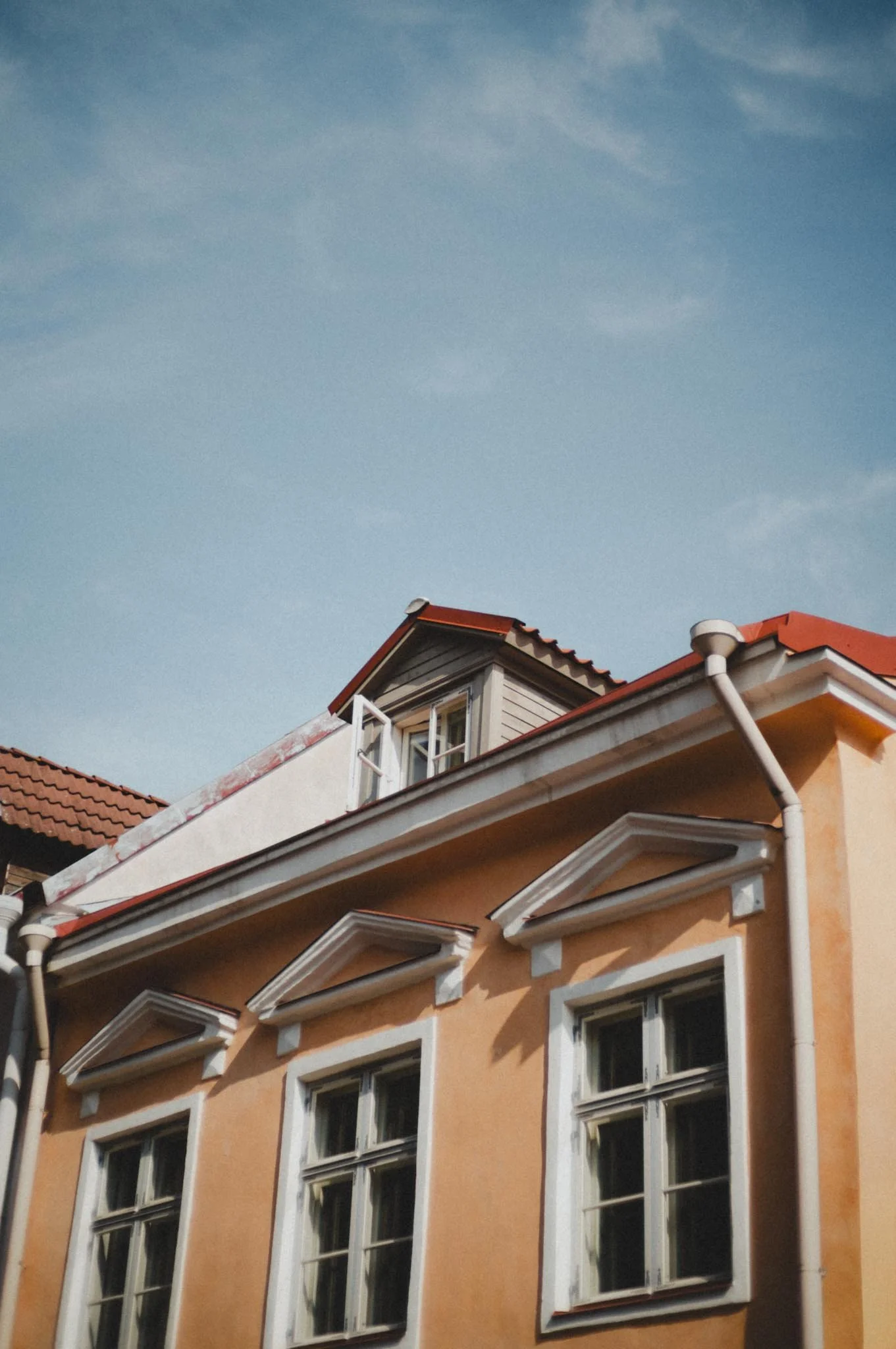
Sample Photos






Want to See More?
📸 Follow me on Instagram for more sample shots from this lens and others:
👉 www.instagram.com/paomees
🛒 Thinking about picking one up? Check current used prices at MPB:
👉 www.mpb.com
Thanks for reading—and let me know in Instagram if you’ve had a different experience with this lens. I’d love to hear how it’s working for you!
