
Leica AF-C1 Review — I Bought It by Accident
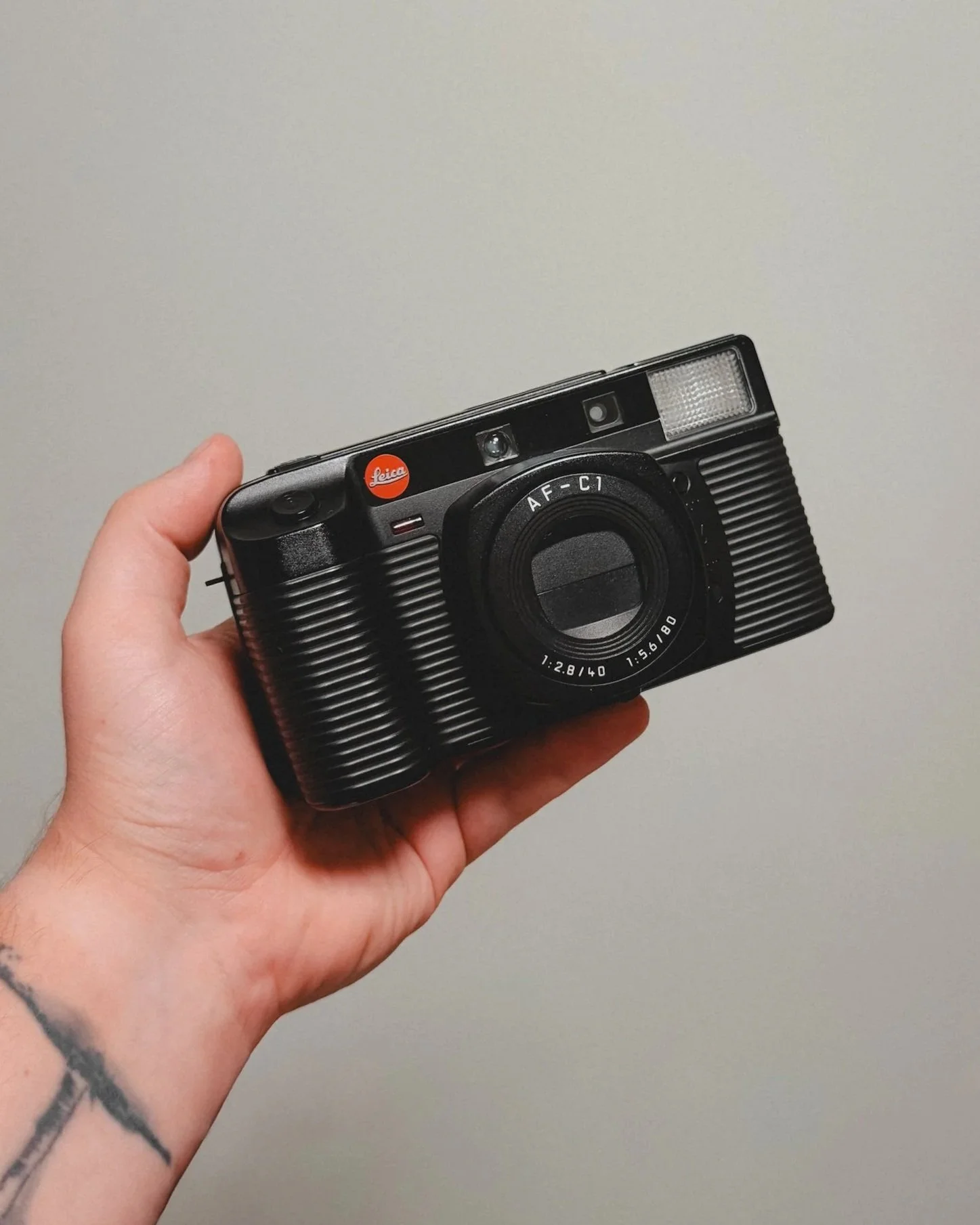
I didn't want a Leica AF-C1.
I wanted a leather case.
More specifically, I found someone selling a proper Leica leather case that fits my Minilux. The only slight inconvenience was that there was already a camera inside it.
A Leica AF-C1.
The whole package was cheap enough that I bought it anyway. I got the case I wanted and, apparently, a free camera.
This is generally how camera collections become a problem.
Since the AF-C1 was now mine, I loaded it with Kodak Gold 200 and put a roll through it to see if it actually worked.
It did.
And annoyingly, I quite liked it.
This is not the Leica people fantasise about
Let's be clear about something.
The AF-C1 is plastic.
It's electronic.
It has autofocus.
It automatically advances and rewinds your film.
It has a zooming viewfinder and a flash that pops out of the top.
If your idea of Leica involves brass, mechanical shutter speeds and staring thoughtfully through a rangefinder while drinking an espresso, this probably isn't the camera you're looking for.
But that's also part of why I like it.
The AF-C1 doesn't pretend to be an M6.
It's a point-and-shoot.
A rather large point-and-shoot.
Actually, let's talk about that.
"Compact" is doing a lot of work here
The AF-C1 is bigger than my Leica Minilux, and the Minilux is already stretching the definition of a compact camera.
You're not putting this thing in your jeans pocket.
Well, technically you might.
But you're going to look very pleased to see everyone.
Fortunately, the AF-C1 is mostly plastic, so despite its size it's surprisingly light. Put a strap on it and wear it around your neck and suddenly the dimensions don't bother me much at all.
It's also genuinely comfortable to hold. There's an actual grip, the controls are simple, and everything is where you'd expect it to be.
And I think it looks good.
Not beautiful in the classic Leica sense.
More like something a reasonably optimistic German engineer in the 1990s thought the future would look like.
I'm into it.
The weird 40mm and 80mm thing
Instead of a normal zoom lens, the AF-C1 gives you two focal lengths: 40mm and 80mm.
This immediately got my attention because 40mm is one of my favourite focal lengths.
At 40mm, it's basically exactly what I'd want from a casual film camera. Wide enough for everyday photography without feeling particularly wide.
Then press a button and you get 80mm.
The viewfinder actually zooms in to match.
This is fantastic.
I could imagine using 80mm at a concert, for portraits or anytime you simply can't get physically closer to something.
There's one slightly alarming detail.
Switch to 80mm and the flash pops up.
The first time this happened, I assumed the camera had decided that all 80mm photographs must involve flash whether I liked it or not.
Thankfully, that's not what's happening. It just prepares the stronger flash output that might be needed at the longer focal length.
Still, it's wonderfully dramatic.
40mm.
click
80mm.
DEPLOY FLASH.
The viewfinder has no business being this good
This might be my favourite thing about the AF-C1.
The viewfinder is huge.
I've used the Minilux, Ricoh GR1s and Nikon AF600, and the AF-C1's finder feels enormous compared with them.
It's bright, framing is easy and, as mentioned above, it actually changes magnification when you switch between 40mm and 80mm.
This sounds like a minor detail until you actually use compact film cameras.
A lot of point-and-shoot viewfinders feel like you're trying to compose a photograph through the wrong end of a drinking straw.
The AF-C1 doesn't.
You can actually see what you're photographing.
Apparently this was considered a feature worth including once.
Unfortunately, the autofocus is terrible
Here we arrive at the part where my accidental bargain reminds me why it was an accidental bargain.
The autofocus hunts.
Quite a lot.
That's annoying by itself, but there's a more frustrating problem: if the camera can't confirm focus, it simply refuses to take the photograph.
You press the shutter.
Nothing.
Try again.
Nothing.
Your photograph has now walked away.
For landscapes, buildings, family snapshots and generally relaxed photography, this isn't necessarily disastrous.
For anything fleeting, it can be infuriating.
And this is especially strange because everything else about the AF-C1 encourages you to treat it like an effortless point-and-shoot.
Film loading is automatic.
Film advance is automatic.
Rewind is automatic.
Exposure is automatic.
Focusing is automatic.
Except sometimes the focusing decides we're not taking a photograph today.
When it works, though…
The first roll surprised me.
Every frame was properly exposed.
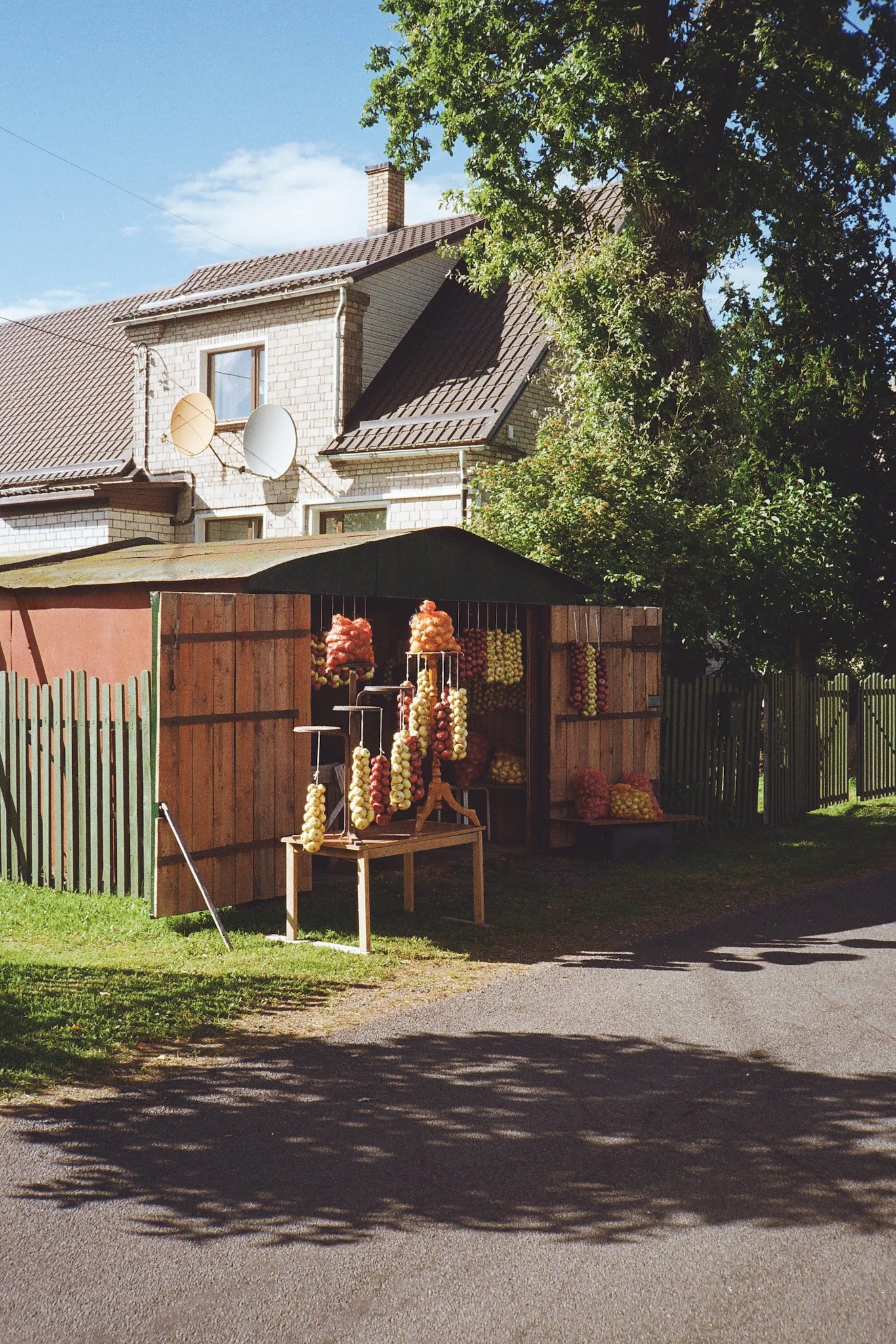
The metering seems excellent, and the photographs from that roll looked sharp and generally much better than I expected from the camera that came free with my leather case.
And that's where cameras like this get interesting.
It's easy to become obsessed with which compact film camera has the legendary lens, which one has the most desirable name on the front, or which obscure model has suddenly become fashionable on Instagram.
Then you put Kodak Gold into some forgotten plastic camera from the 1990s, walk around taking photographs, and the results look…
Good.
Turns out photography is annoying like that.
Would I buy one deliberately?
Maybe.
I paid roughly a third of what these normally seem to sell for, although in my head I paid for the leather case and the camera was free.
This accounting method is extremely useful when collecting cameras and should absolutely not be discussed with your spouse.
At a low price, I think the AF-C1 is genuinely interesting.
You get 40mm and 80mm in one relatively lightweight camera, an excellent viewfinder, reliable metering and completely automatic film handling.
The autofocus is the obvious weakness.
And it's not exactly small.
If your only goal is getting good photographs from a compact film camera, there are plenty of alternatives that are smaller and probably cheaper.
The AF-C1 doesn't have the reputation of the Minilux or Ricoh GR1.
Maybe that's actually a good thing.
The camera that came with my case
After one roll, I'm not going to pretend I've discovered some forgotten Leica masterpiece.
It's a slightly bulky, slightly weird, plastic autofocus camera with autofocus that isn't particularly good.
But I enjoyed carrying it.
I loved the viewfinder.
I like the 40mm/80mm setup much more than I expected.
The exposures were consistently good.
And most importantly, I got a roll of photographs I was happy with.
Which leaves me in the slightly ridiculous position of having bought a camera I didn't want, because it was attached to a case I did want, only to discover that I actually quite like the camera.
I suppose there are worse problems to have.
I bought the AF-C1 for the case.
The case is still great.
Unfortunately, so is the camera.
Sample Photos





Want to See More?
📸 Follow me on Instagram for more sample shots from this camera and others:
👉 www.instagram.com/paomees
🛒 Thinking about picking one up? I buy most of my gear used and from MPB:
👉 www.mpb.com
Thanks for reading—and let me know if you’ve had a different experience with this camera. I’d love to hear how it’s working for you!
